
Origins of the Death Railway: Why the Thailand–Burma Railway Was Built
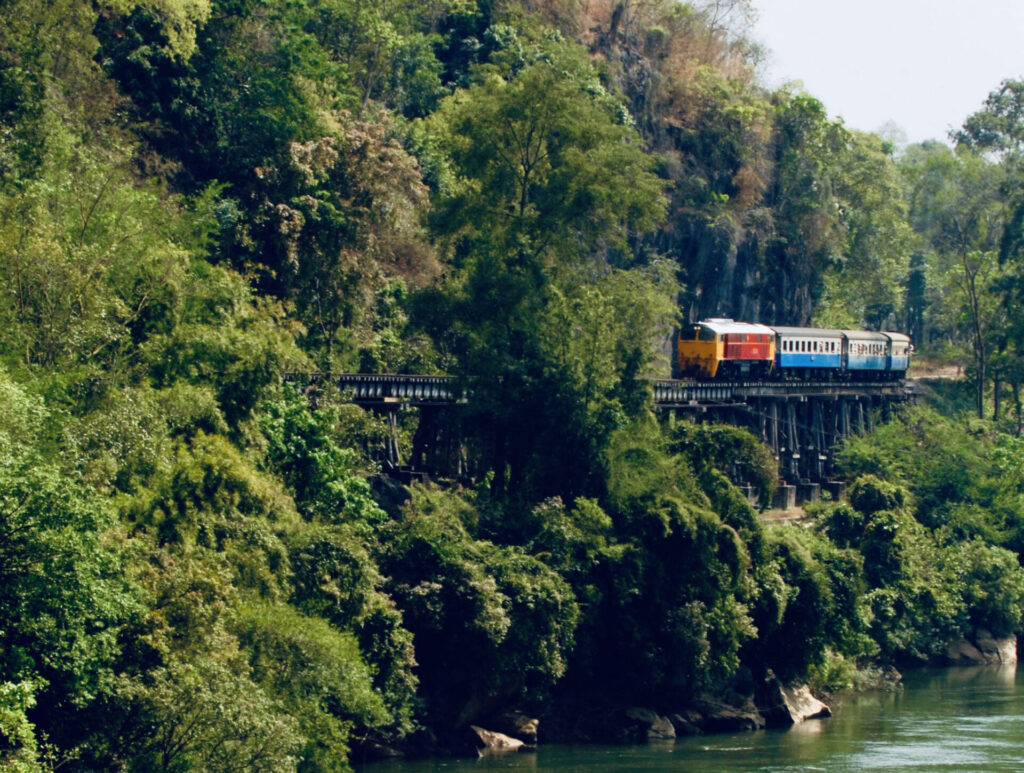
Kanchanaburi is often remembered for the Bridge on the River Kwai, yet the bridge is only one part of a much larger story. To understand the origins of the Death Railway, it helps to look at the mountains, forests and waterways that now create such peaceful scenery. They once shaped one of the most difficult railway projects of the Second World War: the Thailand–Burma Railway, widely known as the Death Railway.
Understanding why the line was built adds meaning to a journey through Kanchanaburi. It explains why the railway followed the River Kwai Noi into Sai Yok, why cuttings were driven through limestone mountains, and why memorials, cemeteries and museums remain essential places of remembrance today.
The idea existed before the Second World War
A rail connection between Thailand, then known internationally as Siam, and British-ruled Burma was discussed long before the Second World War. From the late nineteenth century into the early twentieth century, routes across the border region were proposed and surveyed.
On a map, a railway appeared to offer a useful land connection between the two countries. On the ground, however, the route presented formidable obstacles. Mountain ranges, steep river valleys, dense tropical forest, heavy monsoon rain and endemic disease made construction and long-term operation extremely difficult. Earlier planners therefore judged the project too costly and impractical to pursue.
The geography did not change. What changed was the urgency created by war.
Why Japan revived the railway plan
After Japanese forces advanced through Southeast Asia and captured Rangoon in early 1942, they needed a more dependable way to move troops, weapons, food and other supplies to forces operating in Burma. The existing sea route from Singapore and the Malay Peninsula was long and increasingly exposed to Allied submarines and aircraft.
An overland railway through Thailand promised a strategic alternative. It could connect the Thai rail network with Burma, reduce dependence on vulnerable shipping routes and support further military operations toward India.
In June 1942, Japanese military authorities formally approved the railway project. The selected alignment ran for approximately 415 kilometres from Nong Pladuk, in the Ban Pong area of Thailand, to Thanbyuzayat in Burma, now Myanmar. It broadly followed a corridor that earlier British surveys had considered but rejected because of the terrain and climate.
A railway built from both ends
To accelerate construction, work proceeded from Thailand and Burma at the same time. The original target was to complete the line by December 1943. Track, embankments, bridges and mountain cuttings had to be created across remote country with limited machinery and inadequate transport infrastructure.
The project relied on Allied prisoners of war and a much larger, often under-recorded workforce of Asian labourers, commonly referred to as rōmusha. Many were recruited under false promises, coerced or forcibly transported from across Southeast Asia. They worked in extreme heat and monsoon rain, with insufficient food, shelter, medicine and sanitation.
During the intensified construction phase known as “Speedo,” working hours became even longer as commanders pushed to finish the line. Disease, malnutrition, exhaustion, accidents and brutality caused catastrophic loss of life. The Commonwealth War Graves Commission records that approximately 13,000 prisoners of war died during construction and estimates that 80,000 to 100,000 civilian labourers also died. Exact civilian figures remain uncertain because records were incomplete.
The railway was joined in mid-October 1943, ahead of the December deadline. Completing 415 kilometres of track in such a short period was not simply an engineering achievement; it was made possible by the exploitation and suffering of a vast forced workforce. That human cost is the reason the route became known as the Death Railway.
Why Kanchanaburi became central to the story
Much of the railway’s Thai section passed through Kanchanaburi and Sai Yok, following river valleys and negotiating steep limestone terrain. The Bridge on the River Kwai became its most internationally recognised symbol, especially after the success of the 1957 film. Farther west, however, the scale of the construction challenge becomes even clearer.
At Tham Krasae, the railway clings to a cliff above the River Kwai Noi. At Hellfire Pass, workers cut through solid rock largely by hand. Fires, torches and lamps illuminated the night-time labour, creating an image that led prisoners to call the cutting “Hellfire Pass.” Today, the Hellfire Pass Interpretive Centre and walking trail provide a thoughtful setting in which to learn about those who worked and died there.
What remains of the railway today?
After the war, much of the original cross-border railway was dismantled, abandoned or became unusable. Part of the line in Thailand was later restored, and passenger trains still travel through Kanchanaburi toward Nam Tok. The journey across the bridge and along the cliffside section at Tham Krasae allows visitors to see how closely the railway was shaped by the river and mountains.
A meaningful historical itinerary should include more than a photograph at the bridge. Consider visiting the Kanchanaburi War Cemetery, the Thailand–Burma Railway Centre, the bridge, Tham Krasae and Hellfire Pass. Together, these places connect military strategy with the individual lives affected by the railway.
Where to stay while exploring Kanchanaburi’s railway history
Because the historical sites stretch from Kanchanaburi town into Sai Yok, choosing a stay by location makes the journey more comfortable and avoids trying to cover everything in one day. The Kanchanaburi collection from SERENATA Hotels & Resorts Group offers several ways to experience the landscape surrounding the railway story.
For the closest connection to Hellfire Pass, Hintok River Camp @ Hellfire Pass is a riverside glamping retreat on historic land near the memorial. Its on-site Hintok Story Museum occupies the area of a former prisoner-of-war camp kitchen, allowing guests to approach the past within the setting where part of it unfolded. Nearby, Home Phutoey River Kwai Resort combines a nature retreat and natural hot spring with Second World War museums and galleries in its Peace Park.
Travellers who want to stay directly on or beside the River Kwai Noi can choose among three distinct experiences. The FloatHouse River Kwai Resort offers private floating villas; River Kwai Jungle Rafts Resort presents an electricity-free floating stay connected to the local Mon community; and River Kwai Resotel Resort is a botanical riverside retreat surrounded by tropical greenery.
For travellers combining railway history with the River Kwai Yai or Erawan area, Comsaed River Kwai Resort provides a spacious riverside base, while Hilltop Erawan Camp offers a modern glamping experience near Erawan’s natural attractions.
Explore the full SERENATA Kanchanaburi resort collection and choose a location that matches the part of the province you most want to understand.
A respectful journey through history and nature
The Thailand–Burma Railway is both a historic route and a vast memorial landscape. Visiting it is an opportunity to understand wartime strategy, but also to recognise the prisoners of war and Asian labourers whose lives were consumed by the project.
Allow enough time to read the exhibits, walk quietly through the memorial sites and look beyond the most famous viewpoints. Then, as the journey returns to the river, forest and mountains, the calm of present-day Kanchanaburi carries a deeper meaning: it is not separate from the past, but part of the landscape that remembers it.
Frequently Asked Questions
Why was the Thailand–Burma Railway built?
Japan built the railway during the Second World War to supply its forces in Burma by land. The route reduced reliance on sea transport that was vulnerable to Allied submarines and aircraft.
How long was the original Death Railway?
The original railway extended approximately 415 kilometres from Nong Pladuk in Thailand to Thanbyuzayat in Burma, now Myanmar.
Is the original Death Railway still operating?
The entire cross-border route no longer operates. A section in Thailand was restored, and passenger trains continue through Kanchanaburi toward Nam Tok, including the well-known cliffside section at Tham Krasae.
Which SERENATA resort is closest to Hellfire Pass?
Hintok River Camp @ Hellfire Pass is the most directly connected stay, located near the Hellfire Pass memorial and walking trail. Home Phutoey River Kwai Resort is another convenient base in Sai Yok and also features on-site Second World War museums and galleries.